

Ubisoft is laying off 166 workers based in Canada
It has been a rough period for the Canadian development scene, which was recently rocked by the closure of BioWare.
It has been a rough period for the Canadian development scene, which was recently rocked by the closure of BioWare.
We grab a coffee with section chair Spring McParlin-Jones to learn more about a recently-published generative AI manifesto and other challenges facing the union.

We grab a coffee with section chair Spring McParlin-Jones to learn more about a recently-published generative AI manifesto and other challenges facing the union.

The Game Workers branch of UK trade union IWGB has come to the fore in recent years.
If you've heard the name, it might be because you've been following the high-profile legal battle between GTA VI developer Rockstar Games and a group of fired workers who claim they were ousted for engaging in trade union activity. Specifically, engaging in trade union activity as IWGB union members.
Rockstar, for its part, claims they were dismissed for leaking confidential information. The employment tribunal handling the dispute came to a close this week, but a decision could take weeks or months to materialise.
Maybe you also saw the IWGB and other unions across Europe this week demand lawmakers do more to regulate the use of generative AI. The union, and others from Ireland, Spain, and Milan, published an extensive manifesto outlining why they believe generative AI poses an existential threat to the game industry and its workforce.
As luck would have it, those unions involved chose to publish the manifesto after holding a summit in Manchester. Among their ranks was IWGB Game Workers Union chair Spring McParlin-Jones, who this week agreed to meet me for a coffee to discuss the work the union and its members have been doing.
I chose to ask McParlin-Jones about the perceived threat of generative AI first—not least because it's the issue that has managed to unite workers from so many different countries and backgrounds. We didn't touch on every issue raised in the manifesto—that's why the document exists—but McParlin-Jones did explain her biggest issue with the contentious tech is the risk it poses to emerging talent.
"I think the most important point from the manifesto is that we are losing a generation of junior developers," she explainst. "We might be able to work around that right now with AI—but 20 years from now we're going to end up in a situation where there's just a huge absence in the workforce of people who came up through those positions. QA work. Freelance design. Junior programmers. That's all being replaced by [generative] AI, and suddenly there are a lot of opportunities being lost."
McParlin-Jones feels those who are rallying behind generative AI tech without considering the long-term consequences are "letting a generation down." As many others involved in conversations (and perhaps some heated discussions) regarding the tech have pointed out, some workers aren't being asked to use generative AI—they're being told.
It has led to a sense of inevitability in some corners of the industry. 'This is happening, so why fight it?' is a common refrain. But for McParlin-Jones, that's both defeatist and untrue.
"I do think we should be approaching this [conversation] with a bit of nuance, but ultimately I think the end goal should be cutting it to—I was going to say 'cutting it to the bare minimum,' but we know what the bare minimum is. It's zero. Five years ago this wasn't a thing. No one needs to use this, and I would love to see an industry where it's just not a consideration," says McParlin-Jones.
"That's not realistic in the next five years based on current trajectories. To really see that change, we need organised workplaces. We need a collective presence in so many studios, which I don't think we're getting in the next five years."
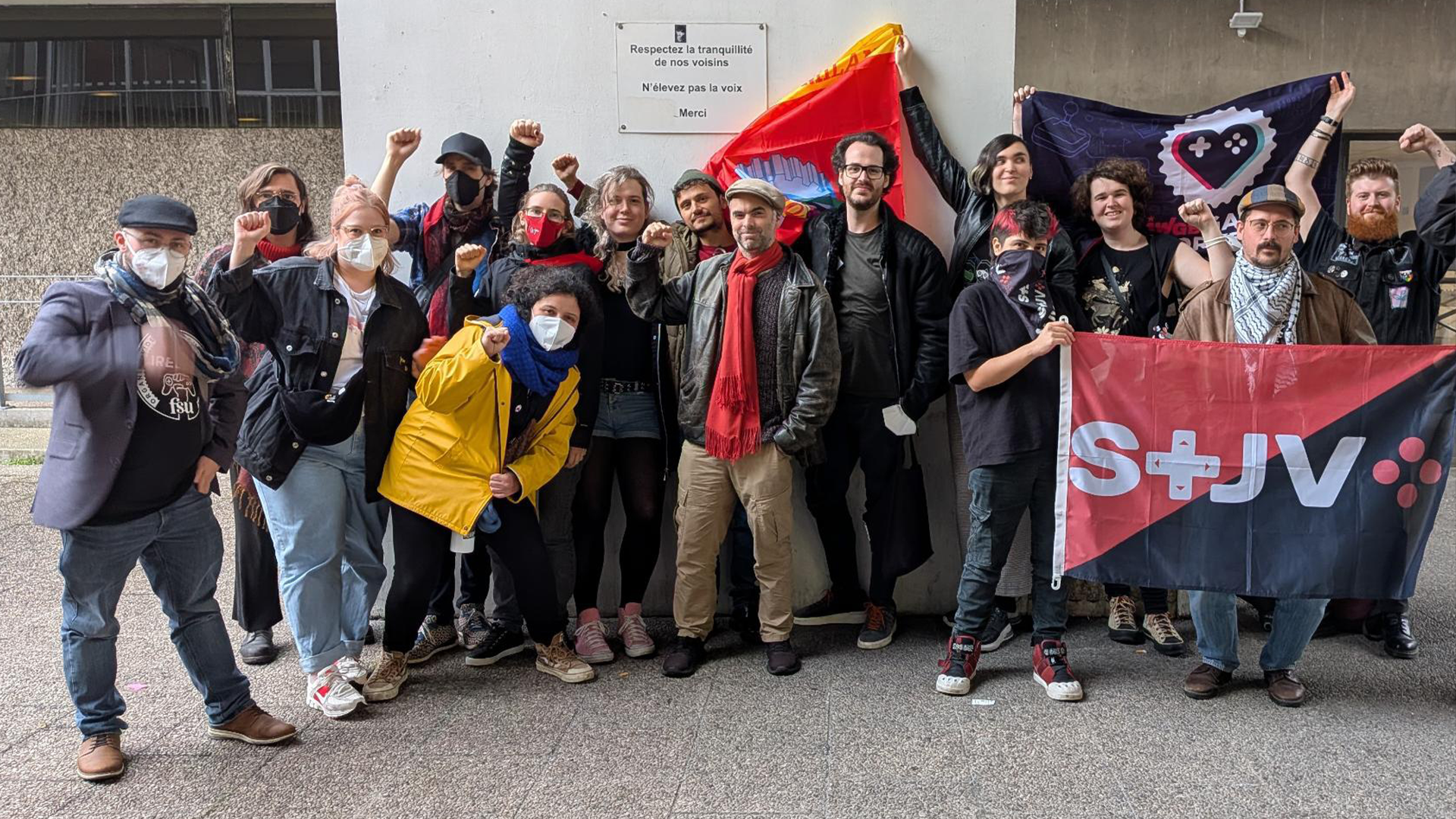
Even so, the IWGB is building momentum. A union spokesperson explains the Game Workers branch includes thousands of members across 300 studios in the UK. That number could balloon in the near future, with Rockstar workers currently taking part in a historic union recognition vote that could turn IWGB Rockstar Game Workers Union into the UK's largest recognised video game union by a country mile.
McParlin-Jones is nervously awaiting the outcome of that vote, but notes that unions have started to become less "abstract" in a tumultuous landscape beset by rampant studio layoffs and closures.
She feels there is perhaps a perception of unions as a lifeboat. A place for workers to seek refuge when their world capsizes. "Whenever a round of layoffs happens, we see a spike in membership because it suddenly stops being abstract for a lot of people. So yeah, the question that we've been asking for the entire time that I've been involved with the union is 'how do we take it from seeing an explosion in membership when there are layoffs to just delivering steady growth?.'"


It appears the moments that make GTA VI shine are unmistakably human. Perhaps there's something in that?

"We do not have to accept the use of genAI to make video games; it is not inevitable."

Sometimes, a cute, sharp little life sim can keep you on track in real life
Vertical Slice is hellbent on serving you. Show your support with a free membership or paid subscription.
